
Nextbots are relentless PNGs that sprint, lunge, and corner you the moment they see you, and learning how to survive nextbots in Evade is the single biggest skill gap between players who last one round and players who clear full lobbies. The fastest runners on the leaderboard are not faster than a Nextbot — they are smarter about when they peek, which hallways they commit to, and how they chain stamina dashes through doorways. This chase tactics guide breaks down the decision-making, movement, and emergency protocols that turn a panic run into a controlled escape across the Nextbots | Evade Wiki | Fandom roster, which includes classics like Angry Munci, Lurking, Vine Dog, Trollge, Baldi, Defect, Eyeless, Fazbore, Pac Man, Rebel, Slasher, and Triple T, plus meme Nextbots like Trollface, Sanic, Pingu, and Obunga. Every section below is written from community-tested patterns, so you can stop guessing and start outliving the swarm round after round.
Understanding the Nextbot Threat Model
A Nextbot in Evade is not a regular NPC enemy — it is a roaming collision box with a fixed walking sprite, no pathfinding cooldown, and a single behavior loop: acquire a target, sprint toward it, and instantly kill on contact. That simplicity is what makes them so dangerous for new players, because there is no "tank phase," no "safe zone aura," and no health bar to whittle down. The only way to win against a Nextbot is to physically avoid line-of-sight or break its targeting before it reaches melee range. If you are still learning the basics, the Evade Roblox beginner guide covers the control layout and round structure that this guide assumes you already know.
| Nextbot archetype | Example sprite | Threat tier in lobby | Typical counter window before contact |
|---|---|---|---|
| Classic chasers | Angry Munci, Lurking, Baldi, Fazbore, Slasher, Triple T | Standard 4–12 spawn pool per round | ~3–5 seconds at full sprint from line-of-sight break |
| Meme chasers | Trollface, Sanic, Pingu, Obunga, Vine Dog, Trollge | Mixed into the same random Nextbot table | 2–4 seconds, often lower stamina tax to reach |
| Special-round chasers | Rebel, Defect, Pac Man, Eyeless | Spawn during Double Trouble / Triple Trouble rounds | 1–3 seconds, overlapping target priority inside 180s round |
According to community data, Nextbots spawn from a server-managed pool, meaning a single round can contain between 4 and 12 active chasers depending on the lobby size and the random Nextbot table. The standard round is 180 seconds, and Nextbots are most lethal in the first 30 seconds of a round because players are still grouped together near spawn, which gives the AI overlapping target priority. Once the lobby spreads, individual chasers focus on a single runner, and that is when personal survival skill matters more than luck.
Nextbot Categories and Speed Tiers
Not every Nextbot moves the same way, and recognizing the visual tells of each tier is the foundation of every escape route. The community has sorted the roster into three broad speed bands, based on how quickly they close distance against a sprinting player with full stamina.
| Tier | Example Nextbots | Relative Speed | Counter Strategy |
|---|---|---|---|
| Slow / Stumble | Baldi, Trollge, Pingu | Walking pace, easy to outrun | Loop around furniture, never panic-dash |
| Medium / Sprint | Angry Munci, Vine Dog, Fazbore, Obunga | Matches player sprint | Use stamina, break line of sight at corners |
| Fast / Teleport-lunge | Lurking, Defect, Triple T, Slasher | Faster than player, lunge on sight | Door stuns, vertical routes, team bodyblocks |
The "Fast / Teleport-lunge" tier is the one that kills most beginners, because these Nextbots visibly close the gap inside a single hallway. Lurking and Defect are especially deadly because their sprites change frame when they detect you, and that visual cue happens about one second before they commit to a lunge. If you see the frame change, do not wait — spam the door close behind you or take the next vertical exit immediately.
Detection, Line of Sight, and Aggro Rules
Every Nextbot follows the same targeting rule: line of sight from the front camera cone triggers aggro, and breaking that line of sight for roughly 1.5 seconds drops aggro on most Nextbots in the slow and medium tiers. Fast-tier Nextbots have a longer memory window, and some (Triple T, Slasher) will continue to the last known position even after you round a corner, which means you cannot simply peek and reset the way you can against a Baldi. The community-tested rule is to put two solid wall segments between you and a fast-tier Nextbot before you slow down, and to never break line of sight in an open atrium because the long sightline re-triggers aggro from across the map.
Movement Fundamentals: Stamina, Doors, and Verticality
Surviving a chase is 80% movement and 20% map knowledge, and the movement layer comes down to three mechanical levers: Stamina Bar, Door Interaction, and Vertical Routes. Players who treat these as a single coordinated kit live noticeably longer than players who only sprint and pray.
Stamina Management
Stamina is the resource that lets you sprint, dodge, and break fall damage, and it regenerates fastest while you are crouched or walking. The mistake most beginners make is sprinting flat-out the moment they hear a chase sound, which drains stamina by the time they reach the corner they actually need to dash around. The pro pattern is to walk between safe rooms, sprint only when crossing open atriums, and dash exactly once at the corner that breaks line of sight. Reserve at least one dash for the door close, because a closed door stuns most Nextbots for roughly 0.6 seconds, and that window is often the difference between a clean escape and a corner kill.
Doors as Stun Windows
Doors are the single most powerful survival tool in Evade, and they are also the most underused by new players. A standard wooden door in Evade costs 0 stamina to close, swings shut in about 0.4 seconds, and any Nextbot that runs into the closed door plays a brief stun animation. The standard chase pattern is to enter a room, let the Nextbot commit to the doorway, close the door on top of it, then exit through a second door or window. Fast-tier Nextbots can break certain doors after a short delay, which is why the doorway trick works best on slow and medium tiers, and why pro players always know a second exit before they commit to a single-room loop.
Verticality and Parkour Sections
Vertical routes are the most reliable counter to teleport-lunge Nextbots because most Nextbots do not have a real jump animation — they take the stairs, fall off ledges, or get stuck on geometry. Ledges that drop one floor are the highest-value escape because the fall cost is small (a short stamina penalty) and the Nextbot has to walk the long way around. Some maps include moving platforms and wall-jump chains that only experienced players use, and if you want to practice these, the Evade complete guide has a breakdown of every map's parkour shortcuts.
Map Knowledge: Where to Run and Where to Die
Map knowledge is the multiplier that turns a generic chase into a guaranteed escape, and there are four map archetypes you will encounter in public lobbies: Halls, Atrium, Maze, and Vertical Tower. Each archetype has a chase-friendly layout and a kill-friendly layout, and pro players learn both before they queue into a hard round.
| Map Type | Chase-Friendly Feature | Kill-Friendly Trap | Best Escape Route |
|---|---|---|---|
| Halls | Long straight corridors with multiple doors | Dead-end hallway with one door | Side door halfway down, break line of sight |
| Atrium | Open central area with catwalks | Center of the floor, no cover | Spiral stair to upper level, drop a ledge |
| Maze | Tight corners, multiple paths | Central hub with four sightlines | Loop around the outer ring, never center |
| Vertical Tower | Stacked floors with elevators | Bottom floor after elevators break | Top floor, then ladder / vent shaft to roof |
The single most common death across all map types is the center of the room, and the reason is line of sight. The center is visible from every door, every balcony, and every catwalk, so a Nextbot that spawns anywhere on the map can almost always re-acquire you there. Pros always run the perimeter, hug walls, and pick corridors that face a single direction so they only have to watch one sightline.
Map-Specific Nextbot Hotspots
Community data on the Fandom wiki tracks where each Nextbot tends to spawn, and the patterns are consistent enough to plan a route around. Angry Munci and Vine Dog are commonly reported near the lobby spawn on Halls maps, Lurking tends to roam the top floor of Vertical Tower maps, and Trollge is often found in Maze hubs. Knowing where a tier is likely to be is more useful than knowing the exact spawn, because you can pre-position near a door or vertical exit before you even see the sprite. If you are still figuring out your control layout, the Evade what to do first guide covers the movement keys and the basic camera handling that makes pre-positioning possible.
Team Play, Bodyblocking, and the Defibrillator Option
Evade is technically a co-op game, and the team layer is the second-biggest lever you can pull after movement. Three team mechanics matter during a chase: Bodyblocking, Callouts, and Revive via Defibrillator. Each one has a specific window where it shines, and each one has a downside if you misuse it.
Bodyblocking: When It Works and When It Gets You Killed
A bodyblock happens when two or more players stand close enough that a Nextbot has to path around them, which buys roughly 1.5 seconds of breathing room for the targeted runner. The block only works in doorways and tight corridors — open-atrium bodyblocks fail because the Nextbot simply walks around the group. The other downside is that every player inside the block shares aggro, so a successful block on a slow Nextbot can become a triple-kill against a fast-tier lunge. The pro pattern is to block in doorways with one blocker and one runner passing through, never in the open, and only against tier 1 or tier 2 Nextbots.
Callouts and Audio Cues
Evade's audio mix is designed so that Nextbot footsteps get louder as they close distance, and the chase music layer kicks in at aggro range. If you are not the targeted runner, you can save a teammate by calling out a Nextbot's direction in chat, which lets the runner pre-aim their next dash. The community rule is to use the directional callout (e.g. "Lurking from east") rather than vague warnings like "behind you," because a directional callout buys a full second of reaction time. For full callout etiquette, the Evade gameplay guide covers the post-round communication patterns that carry into chases.
Reviving Downed Teammates
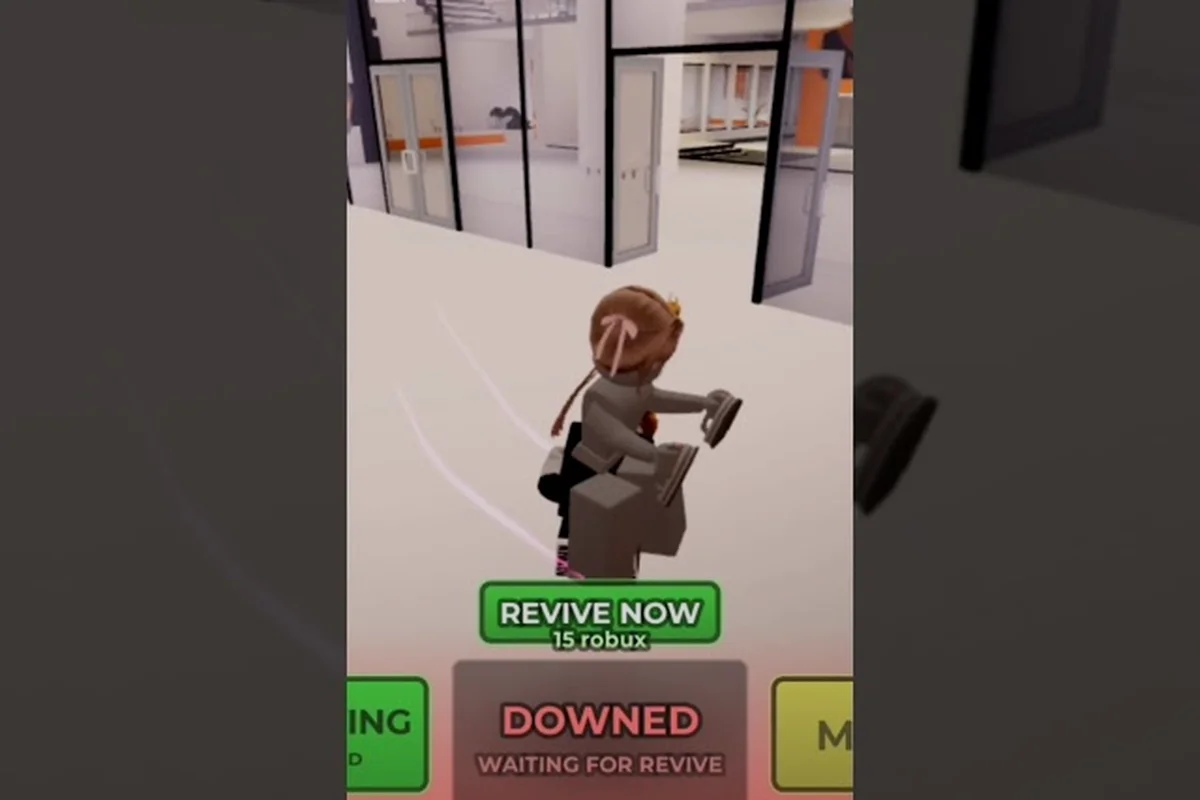
When a Nextbot catches a teammate, they enter a downed state and a defibrillator is the only way to bring them back. The revive window is roughly 8 seconds, and the player performing the revive is locked in place for the full animation, which makes them a sitting duck. The pro pattern is to assign one player to revive and one player to watch the revive corner, then cancel the revive if a Nextbot enters line of sight. For a full walkthrough of the revive timing and the defibrillator spawns, the Evade defibrillator guide covers every revive edge case.
Pro Tips, Loot Priorities, and Round-by-Round Strategy
The last layer of how to survive nextbots in Evade is the round economy — the loot you prioritize, the order in which you clear rooms, and the moments when you should hide versus the moments when you should run. These are the differences between a good player and a leaderboard player, and they all come down to discipline.
Loot Priority During a Chase
Loot is irrelevant if you die before the round timer expires, so during a chase your priority is exit → stamina refill → revive kit → everything else. A stamina refill (any stamina drink or cookie) is the highest-value pickup mid-chase because it lets you chain the door-stun pattern twice instead of once. A defibrillator should only be picked up if a teammate is already downed, because carrying one without a target just slows you down. Weapons in Evade are mostly cosmetic for survival purposes — Nextbots cannot be killed with normal weapons, only avoided — so do not detour for a melee weapon during a chase unless you are farming XP.
Hiding vs Running
The hide mechanic (crouching behind tall furniture or inside closets) works against slow and medium Nextbots but fails against fast-tier teleport-lunges because they check the same hiding spots. The pro rule is to hide only when you have less than 30% stamina and only against a confirmed slow or medium tier, because that is the moment when running is more dangerous than standing still. If you hear the chase music escalate (a higher pitch layer), it almost always means a fast-tier Nextbot has spawned nearby, and that is the moment to break out of hiding and run for verticality.
Round-by-Round Strategy
Evade public lobbies typically run 3 to 5 rounds back-to-back, and the Nextbot spawn rate scales with the round number. Round 1 is the easiest and is the right place to learn a new map's layout. Round 2 introduces mixed tiers and is the right place to practice the door-stun pattern. Round 3 and beyond are the test rounds, and that is when you should focus on staying alive rather than chasing loot. The community data on the Fandom wiki notes that the average survival time in a hard round is roughly 90 seconds, and players who survive past the 120-second mark usually finish the round because most of the lobby has already been eliminated.
Frequently Asked Questions
What is the fastest way to survive nextbots in Evade as a beginner?
The fastest way to survive Nextbots as a beginner is to learn the door-stun pattern and the perimeter-running rule before you learn anything else. Walk between safe rooms, sprint only across open atriums, and close every door behind you so a chasing Nextbot eats the 0.6-second stun. Once you can reliably break line of sight and dash through a doorway without panic, your survival time roughly doubles.
Do slow-tier Nextbots ever become a threat in later rounds?
Slow-tier Nextbots like Baldi and Trollge do not get faster in later rounds, but their spawn count increases, so a single Baldi is easy while four Baldis at once is a different problem. The counter is the same door-stun and perimeter pattern, just chained more often. If you see two slow-tier Nextbots on the same sightline, hide for a moment and let them split up before you commit to a route.
Can a fast-tier Nextbot like Lurking be outrun in a straight line?
No, Lurking and other fast-tier Nextbots are tuned to be faster than a sprinting player with full stamina, which is why a straight-line chase always ends in a corner kill. The counter is to never let the chase go straight — break line of sight at the first corner, take a vertical exit, or close a door and loop back. The moment a fast-tier Nextbot is on your tail in a long corridor, your only real option is a stamina dash into a doorway that you close behind you.
Is it worth picking up weapons to fight a Nextbot?
Weapons in Evade are not designed to kill Nextbots, and even the strongest melee weapons do meaningful damage only to other players in PvP rounds. Picking up a weapon during a chase is a net negative because it costs you a stamina dash, which is the actual survival tool. The only time weapons matter is in the small number of community minigames and event rounds, and even then a defibrillator is the higher-value pickup for a real chase.
How do pro players avoid getting cornered when multiple Nextbots spawn together?
Pro players avoid corner traps by never staying in a room with one exit and by always knowing two escape paths before they cross a doorway. When multiple Nextbots spawn together, the right move is to climb — ledges, ladders, and vents almost always break a multi-target aggro because most Nextbots do not chase vertically. The other pro move is to use a teammate as a doorway block while you exit through a second door, which splits the aggro and lets you escape the cluster.