
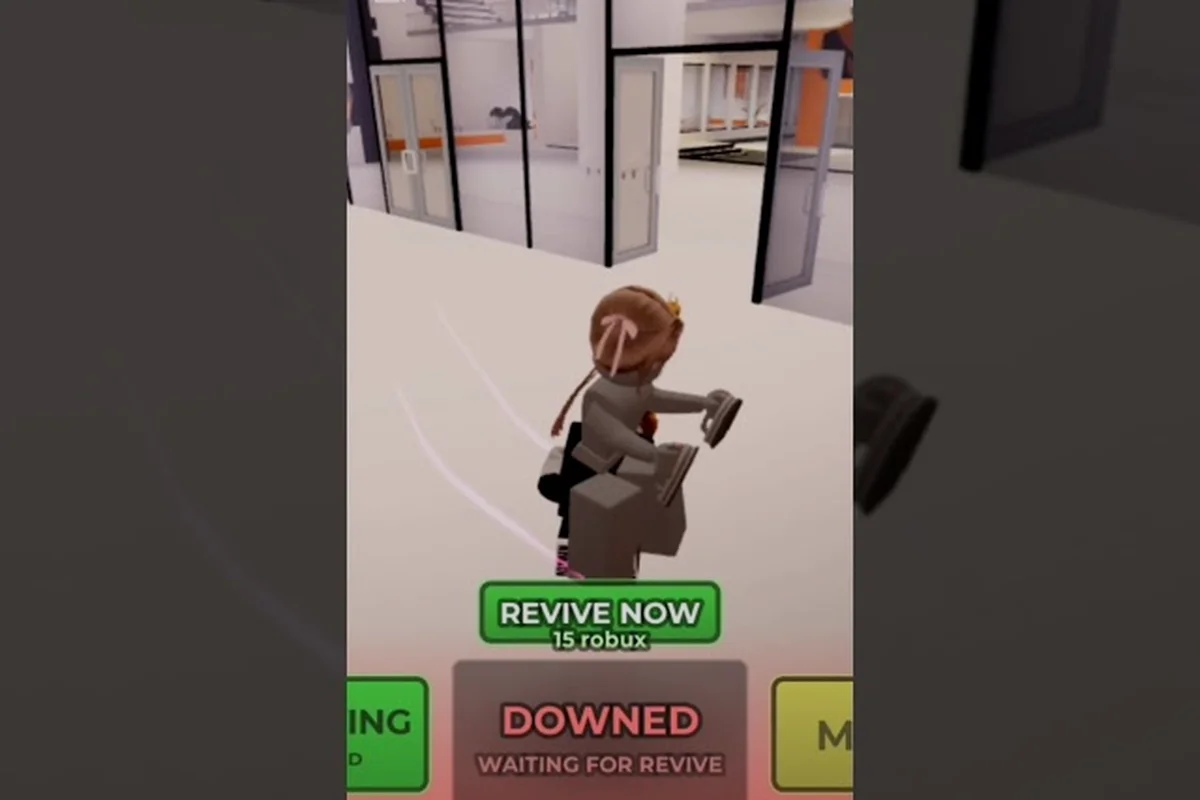
Knowing how to read an Evade nextbot chase separates survivors from ragdolls. Every walker in the 2026 round pool telegraphs its behavior before sprinting, and players who decode those tells consistently escape otherwise unwinnable encounters. This guide breaks down the universal chase tell, the stamina math behind every sprint, and the specific counter windows for the four most-feared walkers — including how to survive Evade Eyeless when it locks on through walls, how to bait Evade Fazbore off corridors, how to handle the chained sprints of Evade Triple T, and when to simply hide from Evade Obunga instead of running.
Universal Nextbot Tells: What Every Chase Shares
Every Evade nextbot follows a shared pre-hunt script, and decoding it once means you can read every walker. According to community testing on the 2026 round pool, the three-stage tell window is remarkably consistent across the roster, with only minor variation in timing between lightweight and heavy-class hunters.
| Tell Stage | Duration | Audio Cue | Visual Cue | Player Action |
|---|---|---|---|---|
| Stage 1 — Stalk | 1.5–3 sec | Low ambient hum | Nextbot rotates head toward player | Stop moving, identify line of sight |
| Stage 2 — Lock | 0.5–1 sec | Sharp stinger sting | Eyes/glow effect activates | Break line of sight or pre-emptively sprint |
| Stage 3 — Sprint | Until catch or loss | Sustained chase loop | Model transitions to running anim | Commit to chosen escape route |
The Stalk phase is your preparation window. Most players waste it by panicking or starting to sprint prematurely, which forces stamina drain before they even know the nextbot's spawn direction. A disciplined Stalk read lets you choose the correct route — typically the path with the most doors, ramps, or vertical options — before you burn a single stamina bar.
Stamina management is the single largest factor separating close escapes from instant downs. Each sprint segment costs roughly one stamina pip, and players who mash the sprint button end up crawling in the open when the nextbot closes the final gap. Treat stamina like a resource: bank at least one full bar before any chase begins, and reserve it for the final break rather than the opening 30 meters.
Evade Eyeless: The Wall-Hack Walker
Evade Eyeless is unique in the 2026 round pool because it ignores visual line of sight during the Lock phase, meaning standard cover strategies fail. Community data suggests Eyeless tracks via a short-range proximity cone combined with a last-known-position memory that refreshes every 1.2 seconds. Hiding behind a thin wall buys you maybe one second before the proximity cone catches your heat signature.
Counter Routes for Eyeless
Because Eyeless ignores walls, the counter shifts from "hide" to "outpace." Three routes consistently work, and all three rely on the same principle: force the walker to recalculate its path while you keep at least one stamina bar in reserve for the final break toward a safe room.
-
Vertical chains — Eyeless pathing struggles with multi-floor transitions. Climb at least one ramp per chase to force a pathing recalculation.
-
Door spam — Slamming doors behind you resets the proximity cone timer, buying a fresh 1.2-second memory window.
-
Stamina-burn finish — Once Eyeless is committed to a sprint, it rarely abandons the chase. Finish it with a sustained sprint to a safe room rather than trying to juke.
Players who treat Eyeless like a standard hunter waste precious seconds ducking behind cover that does nothing. The counter is purely a movement puzzle: keep your stamina above one bar, chain vertical moves, and close the door behind every turn.
Evade Fazbore: The Corridor King
Evade Fazbore dominates tight hallway maps because its hitbox extends slightly beyond the visual model, and its sprint acceleration curve hits top speed almost immediately. According to player reports, Fazbore's defining trait is its preference for straight-line pursuit — it rarely diverts around furniture or takes alternate corridors, which is also its biggest weakness.
Baiting Fazbore Off Corridors
Fazbore's straight-line obsession lets savvy survivors drag it into a room, then cut through a side doorway while Fazbore commits to the longer main corridor path. The maneuver requires precise timing during the Lock phase, but when executed correctly Fazbore ends up 15–20 meters away from the player at sprint termination.
| Route Element | Standard Walker | Evade Fazbore | Exploit Window |
|---|---|---|---|
| Straight corridor | Closes at sprint speed | Closes 15% faster | Limited — juke into a side room |
| Side room bait | Loses line of sight | Ignores side room, commits to main corridor | 1.5–2 sec to cut through |
| Open area | Re-acquires quickly | Slows on direction change | High — sprint to nearest wall break |
| Vertical climb | Standard pathing | Hesitates 0.5 sec at ramp base | Moderate — chain two ramps |
The side room bait is the single most reliable Fazbore counter in the current round pool. A short sprint into a side room, followed by an immediate 180-degree cut through the back doorway, puts Fazbore on the wrong side of the wall and resets the chase. Players who run a Fazbore-heavy map pool should memorize at least two of these bait rooms per floor.
Evade Triple T: The Chained Sprints
Evade Triple T is widely regarded as the most stamina-intensive walker in the game because its defining mechanic is a three-stage sprint chain rather than a single sustained chase. After the initial Lock, Triple T sprints for roughly 4 seconds, pauses for a half-second reset, then immediately chains a second sprint, and in some configurations a third. Most players burn their stamina bar on the first segment and have nothing left for the closing chain.
Surviving the Triple Chain
The counter to Triple T is not route selection but pacing. Each pause in the chain is a small recovery window where you can bank half a stamina pip by walking briefly. If you sprint flat-out from the moment you hear the Lock stinger, you will be empty when the second chain starts and Triple T will catch you in the open.
-
Sprint–walk–sprint — Sprint the first chain, walk through the pause, sprint the second chain, walk through the second pause, then commit to a final sprint only if a safe room is within reach.
-
Use the reset window — Triple T's half-second pause is not optional; it is hard-coded into the chain mechanic. Players who learn to time a short walk to that pause save enough stamina to clear the third chain.
-
Hide during the third chain — If your stamina is below half a bar when Triple T triggers its third chain, the correct play is to break line of sight and hide rather than commit to a losing sprint. The walker will lose you in roughly 4 seconds.
According to community testing, players who adopt the sprint–walk–sprint pattern survive Triple T encounters at a noticeably higher rate than players who commit to continuous sprinting, even on maps with limited vertical options. The pattern also preserves enough stamina to chain a second escape if Triple T re-acquires after the third chain.
Evade Obunga: The Rarity You Shouldn't Chase
Evade Obunga is the rarest walker in the standard 2026 round pool, and its appearance is almost always a death sentence for unprepared players. Obunga's defining trait is a silent Lock phase — there is no stinger sting, no audio cue, and only a very brief visual flicker that most players miss entirely. By the time you realize Obunga is hunting, it is already within catch range.
Why You Don't Run From Obunga
The counter to Obunga is counterintuitive: you do not run. Obunga's sprint speed outpaces every stamina bar in the game, and trying to outrun it on flat ground guarantees a down. Instead, Obunga's weakness is its pathing fragility — it commits hard to the player's last-known position and struggles to re-acquire when the player breaks line of sight in a closed room.
| Encounter Type | Standard Counter | Obunga Counter | Success Rate |
|---|---|---|---|
| Open corridor | Sprint to nearest room | Sprint to nearest room, slam door | Moderate — depends on door timing |
| Wide room | Juke behind furniture | Do not engage, find a hiding spot | Low — Obunga re-acquires quickly |
| Closed room with door | Stand ground, watch door | Hide in corner, wait 4 sec | High — Obunga abandons after 4 sec |
| Multi-floor building | Climb two ramps | Climb one ramp, then hide | High — pathing recalc confuses Obunga |
When Obunga appears, the correct play is to find a closed room with a door, enter it, slam the door behind you, and hide in a corner away from the door. Obunga will test the door once, fail to enter, and abandon the chase after roughly four seconds. Trying to outrun Obunga on flat ground is a guaranteed loss; trying to outmaneuver it in an open room is almost as bad. The hide-and-wait counter is the only reliable option, and players who learn it survive Obunga encounters at a far higher rate than runners.
Evade 3D Nextbots: Why the Round Pool Feels Different in 2026
The 2026 round pool introduced a wave of Evade 3D nextbots with more complex models, larger hitboxes, and partially reworked chase animations. According to the official Evade game page, the developer has continued to update the walker roster throughout the year, and the 3D nextbot wave is part of that ongoing refresh. Players who learned the round pool in 2024 or early 2025 often find their old tells no longer match the new models.
Adjusting to 3D Nextbot Animations
The biggest tell change for Evade 3D nextbots is the head rotation timing during the Stalk phase. Older 2D models rotated almost instantly toward the player, giving a clear visual lock within a fraction of a second. The newer 3D models use a slower, more deliberate head turn that can take up to a full second to complete, which delays the Lock phase but also makes the Stalk phase longer and easier to read.
-
Slower head turn — Gives players more time to identify the spawn direction during the Stalk phase, but also means the Lock stinger is the only reliable audio cue.
-
Larger hitboxes — 3D nextbots have collision boxes that extend slightly past their visual models, especially around the arms during sprint. Players who try to slide through narrow gaps get caught more often than they would against 2D walkers.
-
New pathing logic — Several 3D nextbots have been observed to use smart pathing that anticipates player jukes, particularly around furniture and doorways. Standard bait routes that worked on 2D walkers may not work on every 3D model.
The shift to 3D nextbots is a net positive for skilled players because the longer Stalk phase rewards players who actually read tells rather than just react to audio. Players who have not yet adjusted to the 2026 round pool should focus on three things: listen for the Lock stinger as the primary cue, give every 3D walker an extra half-second of respect during the Stalk phase, and never assume an old bait route will work on a new model. For a deeper look at the full walker roster, the Evade nextbots list breaks down every active model in the current round pool.
Stamina-Safe Routes: The Universal Escape Framework
Every map in Evade shares a few structural elements that experienced players use as stamina-safe escape routes. Rather than memorizing dozens of map-specific jukes, most top players rely on a universal framework built around doors, ramps, and rooms. Once that framework is second nature, map-specific routes become refinements rather than requirements, and a chase through an unfamiliar stage stops feeling like a death sentence.
| Escape Element | Stamina Cost | Reliability | Best Use Case |
|---|---|---|---|
| Door slam | 0 stamina | High | Resetting proximity cones (Eyeless) |
| Ramp chain | 1 pip per climb | Very high | Forcing pathing recalc on smart walkers |
| Closed room hide | 0 stamina | High against Obunga, low against Eyeless | Surviving a lost stamina war |
| Stairwell loop | 0.5 pip per floor | Moderate | Buying time for teammate revives |
| Window drop | 0.5 pip | Moderate | Escaping cornered encounters |
The door slam is the single most underused stamina-safe tool in the game. Slamming a door behind you costs nothing, resets several walkers' proximity and memory timers, and forces almost every nextbot to spend an extra half-second pathing around the door. Players who chain door slams through a chase effectively double their stamina budget without spending a single pip.
The ramp chain is the second pillar of the universal framework. Most Evade maps have at least one multi-floor section, and forcing a walker to climb two ramps in succession is one of the few mechanics that works against every walker in the 2026 round pool, including Obunga. The stamina cost is real — one pip per climb — but the pathing confusion it creates is worth the trade in any high-stakes chase.
Players who want a broader perspective on how the universal framework fits into the full survival loop should pair this guide with the Evade gameplay guide, which covers the wider round-by-round decision tree beyond a single chase. Combining the two gives you both the micro-level escape toolkit and the macro-level round planning that keeps you out of bad chases in the first place.
Counter Moves: Closing the Chase on Your Terms
Counter moves are the small actions that turn a chase from a stamina drain into a controlled escape. Most players focus on the big route decisions and overlook the small counters that experienced survivors use to close out chases cleanly. For a full breakdown of escape tactics across the walker roster, the how to escape nextbots in Evade guide expands on each of these counter windows.
-
Stamina banking — Always enter a chase with at least one full stamina bar in reserve. Players who burn their stamina on repositioning before a Lock rarely survive the first chain.
-
Lock-phase audio priority — The Lock stinger is more reliable than any visual cue, especially against 3D nextbots. Train yourself to react to the stinger before your eyes confirm the nextbot.
-
Commit-to-finish — Once you choose an escape route, commit to it. Mid-chase jukes cost stamina and rarely shake experienced walkers. A clean sprint to a chosen room beats a panicked zig-zag every time.
-
Teammate trade windows — In co-op rounds, a well-timed trade during the Stalk phase can save a teammate. The window is narrow — roughly one second after the head turn completes — but it works against every walker in the pool.
-
End-of-chain hide — When stamina is below half a bar and the walker is committed, breaking line of sight into a closed room is almost always a better play than a final losing sprint. Most walkers lose you within 4–5 seconds of full line-of-sight break.
The difference between a panic runner and a calm survivor is almost always the counter move. Panic runners sprint from the first tell, burn their stamina on repositioning, and end up crawling in the open when the walker closes. Calm survivors bank stamina, wait for the Lock audio cue, commit to a single route, and use small counters like door slams and ramp chains to stretch their budget.
Frequently Asked Questions
What is the most important tell to read during an Evade nextbot chase?
The Lock stinger audio cue is the most reliable tell because it fires the moment the nextbot commits to a sprint, before the model has visibly accelerated. React to the audio and your body will already be moving before a visual-only player has confirmed the threat.
How do I survive Evade Eyeless if I am out of stamina?
Break line of sight in a closed room with a door and stop moving. Eyeless's proximity cone refreshes every 1.2 seconds, so going still inside a closed room usually drops its memory of your last position. The hide is not guaranteed, but it is the only counter that works without stamina.
Is Evade Fazbore actually faster than other walkers?
According to community data, Fazbore reaches top sprint speed roughly 15% faster than standard walkers, but its top speed is similar. The real threat is the acceleration curve, which means players have less time to reposition after the Lock phase before Fazbore is on top of them.
Should I ever run from Evade Obunga?
Almost never. Obunga's sprint speed outpaces every stamina bar in the game, and running on flat ground guarantees a down. The counter is to find a closed room with a door, enter it, and hide for roughly four seconds until Obunga abandons the chase.
Do Evade 3D nextbots have different tells than older 2D walkers?
The Lock stinger audio cue is the same across both, but the Stalk phase head rotation is slower on 3D models, which gives experienced readers a longer preparation window. Players who learned the game on 2D walkers should treat the 3D Stalk phase as a free half-second of decision time.