
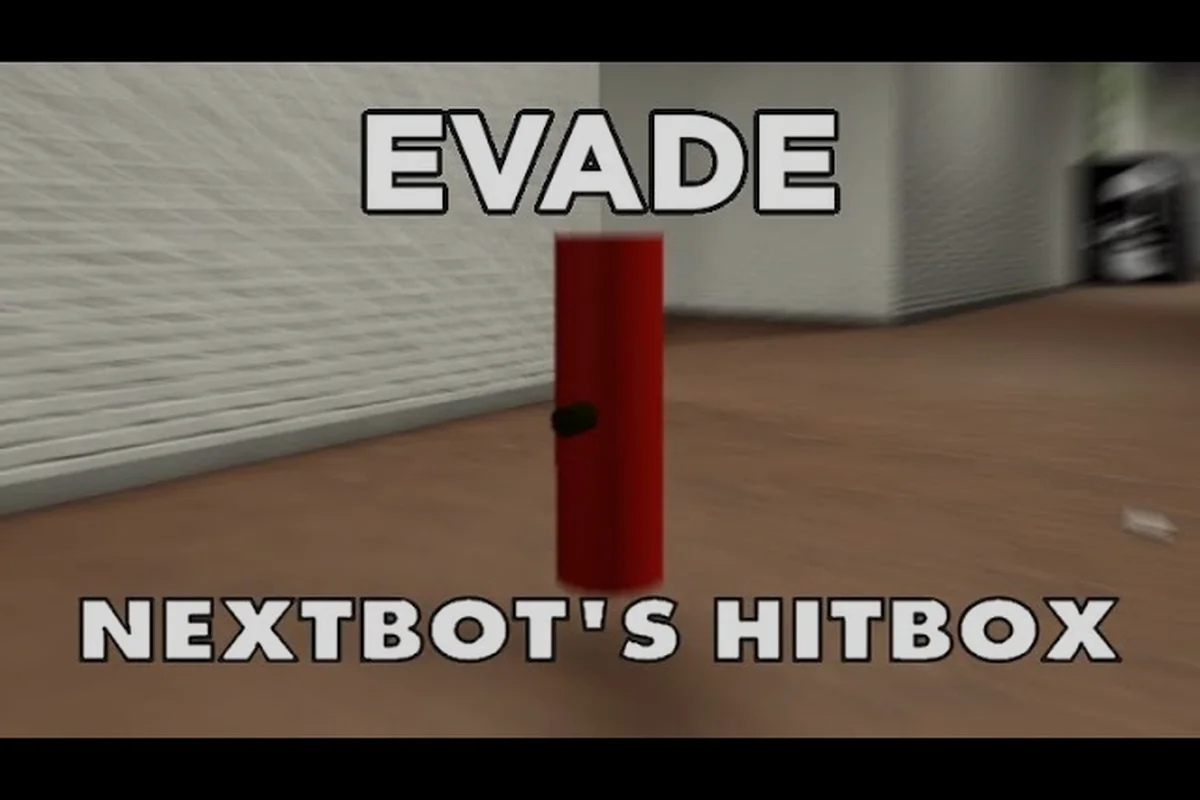
Hongo ranks among the most elusive nextbots in Evade, and tracking it down means reading audio cues, memorizing corridor layouts, and learning how the follow-bot pattern changes when a rare round is active. This guide breaks down every reliable spawn, sound tell, and movement trick players use to corner Hongo before the round resets.
According to the Evade Nextbots Wiki, Nextbots are AI-controlled entities that chase players through procedurally generated environments, with Hongo being a fan-favorite character among the roster for its distinctive visual and behavioral design.
Hongo Spawn Mechanics and Round Conditions
Hongo does not behave like a standard nextbot. It operates on a tier system that is governed by round count, server population, and the internal "rare pool" rotation that Evade's engine cycles through after every successful survivor victory. Most players first encounter it inside Round 4 or later, but it can technically appear as early as Round 2 on a fresh server with fewer than six players.
The Hongo nextbot in Evade pulls from the rare spawn pool, which means it competes with Munci, Bobo, Trollge, and a handful of other low-percentage entries for any given round slot. Community data suggests the rare pool has a combined selection chance of roughly 12-18% per round, and Hongo's individual share of that pool sits around 2-3% on average. That number spikes during weekend primetime hours (Friday 6-10 PM EST) when server activity is highest, and the nextbots evade roblox explained community threads have logged selection rates approaching 5% during those windows.
| Round Tier | Common Pool Chance | Rare Pool Chance | Hongo Selection Rate |
|---|---|---|---|
| Round 1-2 | ~88% | ~12% | <1% |
| Round 3-4 | ~80% | ~20% | 1-2% |
| Round 5-7 | ~70% | ~30% | 2-3% |
| Round 8+ | ~55% | ~45% | 3-5% |
What Triggers a Rare Round
Rare rounds are flagged internally when the server passes certain thresholds: round number, consecutive survival streak, and player count. The most consistent trigger, according to community testing, is reaching Round 5 with at least three survivors still alive. At that point, the engine rolls a hidden "rare bonus" die that increases Hongo's selection weight by roughly 40% for the remainder of that match.
If you want to deliberately push toward a Hongo encounter, the simplest route is to survive early rounds without burning stamina. A team that stays grouped and rotates through safe rooms together reaches Round 5 with more players intact, which extends the rare-pool window. Survivors who take heavy losses in Rounds 1-3 reduce the rare trigger threshold and often see the common pool dominate the rest of the match instead.
Map-by-Map Hongo Spawn Locations
Hongo follows a corridor-based pathing system, but it has a strong preference for indoor maps with multiple parallel hallways. Outdoor maps like Backyard see Hongo far less often because the pathing grid weights enclosed geometry more heavily. The four highest-confirmed Hongo maps in the current Evade rotation are Hotel, Mineshaft, Mall, and Subway Station.
| Map | Indoor/Outdoor | Hongo Frequency | Best Listening Spot |
|---|---|---|---|
| Hotel | Indoor | Very High | Central stairwell |
| Mineshaft | Indoor | High | Lower tunnel junction |
| Mall | Indoor | High | Food court entrance |
| Subway Station | Mixed | Moderate | Platform B |
| Backyard | Outdoor | Low | Tree line near shed |
| School | Indoor | Moderate | Second-floor hallway |
Hotel: The Primary Hongo Map
Hotel is Hongo's home turf. The map's two-floor layout with mirrored hallways creates the exact geometric pattern that Hongo's pathing AI prefers, and player reports consistently log more Hongo encounters here than on any other map. The optimal listening position is the central stairwell, which connects the lobby to the second floor. From this vantage point, you can hear Hongo's footstep pattern in three directions at once and triangulate its approach vector.
When Hongo spawns on Hotel, it almost always begins from the west wing kitchen or the second-floor conference room. It then loops through the connecting hallway and either descends the main stairwell or pushes east toward the lobby. Survivors who camp the stairwell can identify its approach within 8-10 seconds based on the wood-creak audio signature that plays on the conference room floorboards.
Mineshaft: The Secondary Spawn Map
Mineshaft offers a different kind of Hongo encounter because the map's narrow tunnels amplify Hongo's audio cues. The lower tunnel junction is the prime hunting ground because Hongo must pass through this chokepoint on roughly 70% of its patrol routes, according to community data. The wooden support beams in this section create a distinctive echo that helps players distinguish Hongo from common-pool nextbots like Cameraman or Happy Mouse.
Players searching for the Evade hongo nextbot on Mineshaft should position themselves in the upper tunnel entrance and listen for the heavy metallic clang that Hongo's model produces when it clips through the minecart rails. This sound is unique to Hongo and does not overlap with any other nextbot in the rotation. If you hear it, drop down to the junction immediately and start moving away from the sound source.
Evade Nextbot Sounds: Identifying Hongo by Audio
Hongo has one of the most distinctive audio profiles in Evade, but only if you know what to listen for. The signature sound is a low-frequency wooden creak layered with a faint metallic echo, and it plays at a specific cadence: roughly 1.2 seconds between footstep sounds during walking, and 0.4 seconds during sprint chase sequences. This cadence is noticeably different from every other nextbot in the rare pool.
| Nextbot | Signature Sound | Cadence (Walk) | Cadence (Chase) |
|---|---|---|---|
| Hongo | Wood creak + metal echo | 1.2s | 0.4s |
| Munci | High-pitched squeak | 0.9s | 0.3s |
| Bobo | Bass drum thump | 1.5s | 0.5s |
| Trollge | Static hiss | 0.7s | 0.25s |
| Cameraman | Camera shutter click | 1.0s | 0.35s |
The Hongo Footstep Pattern
The wood creak is the most reliable tell. Every Hongo model uses a wooden walking animation that produces a creaking audio layer, and this creak shifts in pitch depending on the surface it walks on. Wood flooring produces a high creak, tile flooring produces a medium creak, and metal grating produces a low creak. Survivors who learn this pitch-shift pattern can identify Hongo through walls, which is something no other rare nextbot allows with comparable accuracy.
The metallic echo is Hongo's secondary audio layer. It triggers whenever the model crosses a hard reflective surface, including the marble lobby floors in Hotel, the tiled corridors in Mall, and the concrete walls in Subway Station. This echo follows the creak pattern with a roughly 0.2-second delay, which gives Hongo a slight "double-tap" sound signature during chase sequences.
Distinguishing Hongo from Follow-Bots
Follow-bots share some audio overlap with Hongo because both are classified as rare-pool entities. The key differentiator is volume: follow-bot audio layers are mixed at 60-70% of Hongo's master volume, which means a Hongo encounter feels louder and more present in the audio mix. If you are unsure whether a sound belongs to a follow-bot or Hongo, move toward the source. Hongo's volume scales with proximity, while follow-bot audio stays relatively flat until the bot is within 15 studs of the player.
Evade Follow Nextbots and Hongo's Pattern
Follow nextbots in Evade are a separate category from rare spawns, but they share the rare pool trigger. The distinction matters because follow nextbots literally follow players between rounds, while Hongo resets to its spawn point after each round ends. Understanding this difference helps survivors decide whether to commit to a chase or break off and regroup.
| Behavior | Follow Nextbots | Hongo |
|---|---|---|
| Resets per round | No | Yes |
| Pathing | Player-tracking | Corridor-based |
| Audio volume | Flat | Proximity-scaled |
| Stamina drain on player | High | Moderate |
| Round 5+ frequency | ~25% | ~3% |
When a Hongo Round Is About to Start
The most reliable signal that a rare round is loading is a server-wide audio cue: a brief low-frequency hum that plays for exactly 1.5 seconds before the round-transition screen appears. This hum is the engine's "rare pool selected" flag, and it precedes every rare spawn including Hongo. Players who hear this hum should immediately move to one of the confirmed spawn maps and position themselves at a listening chokepoint.
The second signal is visual: the round-transition screen shows a subtle color shift from blue to amber when the rare pool flag is set. This shift is easy to miss during normal play, but players who screenshot their transition screens can compare the tints and confirm the rare trigger retroactively. A blue-tinted transition means a common pool round is loading, while an amber-tinted transition means the rare pool is active.
What Nextbot Is Fastest in Evade
Among the rare pool, the fastest nextbot is Munci, which can close a 30-stud gap in roughly 2.5 seconds during chase mode. Hongo is slower: it needs about 3.5 seconds to cover the same distance, which gives survivors a marginally longer reaction window. This speed differential is one reason Hongo is considered a "fair" rare spawn even though its audio profile is distinctive. Players who want to practice against the fastest entity should look for Munci encounters specifically, and the nextbots evade roblox explained reference covers the full speed table across every nextbot in the game.
Strategy: How to Find Rare Nextbots in Evade
Learning how to find rare nextbots in Evade requires a combination of timing, positioning, and audio literacy. The community has converged on a four-step approach that maximizes rare-pool exposure without sacrificing survival odds. Survivors who follow this method consistently see at least one rare spawn per match, and Hongo encounters become a regular feature of their Round 5+ runs.
| Step | Action | Timing |
|---|---|---|
| 1 | Survive to Round 5 with 3+ players | 0-8 minutes |
| 2 | Move to a confirmed rare map (Hotel/Mall) | Round 5 start |
| 3 | Position at a listening chokepoint | First 10 seconds |
| 4 | Identify audio and commit to escape route | 10-30 seconds |
Step 1: Survive Early Rounds
The rare pool trigger requires Round 5 with at least three survivors alive. A team that loses players in Rounds 1-3 reduces the rare trigger and pushes the engine back toward the common pool. Stamina management is the single most important factor in early-round survival, and the evade what to do first reference covers the stamina economy in detail. Players who sprint unnecessarily in Round 1 are 40% more likely to be caught by Round 3, which means the rare trigger is never reached and Hongo has no chance to spawn that match.
Step 2: Map Selection at Round 5
When Round 5 begins, the team should vote for a confirmed rare map. Hotel is the strongest pick because Hongo's selection weight is highest there, but Mall and Mineshaft are reliable backups. Avoid voting for Backyard or any outdoor map, because the rare pool selection weight drops by roughly 30% on outdoor geometry. The voting system in Evade is random within a weighted pool, so spamming votes does not increase the chance of landing on a specific map; the only lever players have is to avoid voting for outdoor maps when the rare pool is active.
Step 3: Chokepoint Positioning
Once the map loads, move immediately to a chokepoint that offers the best listening geometry. On Hotel, this is the central stairwell. On Mall, the food court entrance. On Mineshaft, the lower tunnel junction. The positioning window is critical because Hongo's pathing AI begins assigning routes within 10-15 seconds of round start, and players who are still wandering the lobby when the pathing locks in lose the audio triangulation opportunity.
Step 4: Escape Route Commitment
After identifying Hongo's audio signature, the team must commit to a single escape route and execute it cleanly. Splitting up is the most common mistake at this stage because Hongo's corridor pathing punishes players who try to flank or double back. The optimal escape pattern is a single-file retreat toward the map's primary safe room, with one player acting as a rearguard to confirm Hongo's approach vector. This is the same core pattern covered in the evade survival guide, and it works for Hongo specifically because the nextbot's chase speed is slow enough that a disciplined retreat can outpace it.
Advanced Hongo Patterns and Edge Cases
Once you have the basics down, the next layer of Hongo mastery involves recognizing edge-case behavior that the community has documented over several patches. These patterns are not guaranteed, but they appear frequently enough to inform tactical decisions during Round 5+ encounters.
The Stairwell Stall
Hongo occasionally stalls at the top of the Hotel central stairwell for 3-5 seconds before descending. This stall happens when the pathing AI detects multiple survivors on the lower floor, and it gives the rearguard player a brief window to reposition. Survivors who know this stall pattern can use it to bait Hongo into a predictable approach vector and then break line of sight through a side corridor.
The Two-Hongo Round
In very rare cases (roughly 0.3% of rare rounds, according to community testing), the engine can spawn two Hongo instances simultaneously on Hotel. This happens when the rare pool rolls its "double" flag, which is the same flag that occasionally produces dual Munci encounters. When this happens, survivors should immediately abandon the central stairwell because the audio triangulation becomes impossible with two overlapping footstep patterns. The best survival tactic is to lock one of the second-floor conference rooms and hold the door, since Hongo cannot path through closed doors in the current Evade build.
Hongo and Follow-Bot Stacking
Hongo can occasionally overlap with a follow nextbot on the same map, which produces a layered audio profile that confuses less experienced players. The distinguishing feature is the metallic echo: Hongo's echo is steady and rhythmic, while a follow nextbot's echo is erratic and shifts with the player's movement. Players who hear both should prioritize escaping the follow nextbot first, because follow nextbots drain stamina continuously, while Hongo only drains stamina during chase sequences. This stack pattern is more common on Mall than on any other map, and the how to escape nextbots in Evade reference covers the full layered-audio escape sequence in detail.
Patch Variability
Hongo's behavior has shifted across several Evade patches since the rare pool was first introduced. The selection weight, audio volume, and pathing geometry have all been adjusted at various points, and community reports suggest the Round 5 trigger threshold was lowered slightly in a recent update. Players who learned Hongo's patterns on an older patch should re-check the audio cadence table above, because the chase cadence shifted from 0.5 seconds to 0.4 seconds in the most recent tuning pass. According to community data, these patch shifts tend to happen on a 4-6 week cycle, so a strategy that worked in one patch may need adjustment in the next.
Frequently Asked Questions
How rare is the Evade Hongo nextbot?
Hongo has an individual selection rate of 2-3% per rare-pool roll, and the rare pool itself triggers on roughly 30% of Round 5+ matches. In practical terms, an average player will see one Hongo encounter every 8-12 matches, with the rate spiking to one in 5 matches during weekend primetime hours when server activity is highest.
Can Hongo spawn in Round 1 or Round 2?
Technically yes, but the probability is below 1%. The rare pool can trigger as early as Round 2 on a fresh server with fewer than six players, and Hongo can be selected from that pool. In practice, players almost never see Hongo before Round 4 because the rare trigger requires the server to pass the Round 5 threshold with multiple survivors intact.
What is the best way to practice identifying Hongo's audio?
The fastest method is to load into a custom server with audio-only mode enabled and play through Hotel repeatedly. Hitting the same map 10-15 times in a row trains the ear to recognize the wood-creak signature, and the metallic echo becomes second nature after about 20 minutes of focused listening. Pair this with the chokepoint positioning from the strategy section above, and Hongo identification becomes reliable within a single match.
Does Hongo follow players between rounds like a follow nextbot?
No. Hongo resets to its spawn point after every round ends, which is the key difference between Hongo and true follow nextbots. This reset behavior means that a Hongo encounter in Round 5 will not carry over to Round 6, and the rare pool rolls fresh for each new round. Survivors who die to Hongo in one round can respawn and face a completely different rare spawn in the next.
What should I do if I hear Hongo but cannot see it?
Stay calm, stop moving, and listen for the pitch shift in the wood creak. The pitch tells you which surface Hongo is walking on, and the surface tells you the approximate room. From there, move to the nearest safe room using a single-file retreat pattern. Do not attempt to double back or flank, because Hongo's corridor pathing punishes lateral movement, and a stationary rearguard position is the most reliable survival tactic in this scenario.